

On Saturday, Aug. 17, a group of Colorado Parks and Wildlife (CPW) employees consisting of district wildlife managers, wildlife damage specialists, wolf conflict coordinator and Colorado-based USDA Wildlife Services employees headed out for training to expand their knowledge and expertise in depredation prevention and investigations. Over the next two weeks, the group of 16 would spend one week each in Oregon and Idaho, learning everything from ideal wolf habitat, conflict mitigation and hazing techniques, and wolf depredation investigation from experts with the Oregon Department of Fish and Wildlife (ODFW), Idaho Fish and Game, USDA APHIS Wildlife Services (WS) and local cattle and sheep producers.
“We are always looking for opportunities to learn from others who are already managing gray wolves in the western U.S. to expand our knowledge and expertise,” said Garett Watson, CPW Northwest deputy regional manager. “When looking at locations and topics, we wanted to ensure we were learning from wolf program experts who manage wolves where they are federally listed with no 10(j) status, to areas where wolves are no longer listed and under state management. After participating in trainings focused on depredation investigation [Wyoming] and coexistence [Montana] with cattle, we wanted to focus more on what we can do to help prepare and support Colorado’s woolgrowers, as well.”
The first stop on this trip would be to Oregon’s western wolf-management zone in southwest Oregon where wolves are still listed under the Endangered Species Act (ESA) and managed by the U.S. Fish and Wildlife Service (USFWS). While Oregon manages wolves in three different zones across the state, in this zone, management related to harassment and taking of wolves is regulated by USFWS, not Oregon Department of Fish and Wildlife (ODFW).
To kick off the week-long training, CPW staff sat down with WS to learn how they utilize drone technology to assist in wolf management, specifically the hazing of wolves. While some CPW staff already use drones in many ways to help with research, wildlife management and, in a few cases, hazing, for most this is still a new tool in our technology toolbox.
“Hearing the experts talk about hazing with drones was very interesting,” said Ethan Kohn, Northwest Region wildlife damage specialist. “To see it in action during one of the field demonstrations was eye opening. It got everyone thinking of how we can implement it when we get back home.”


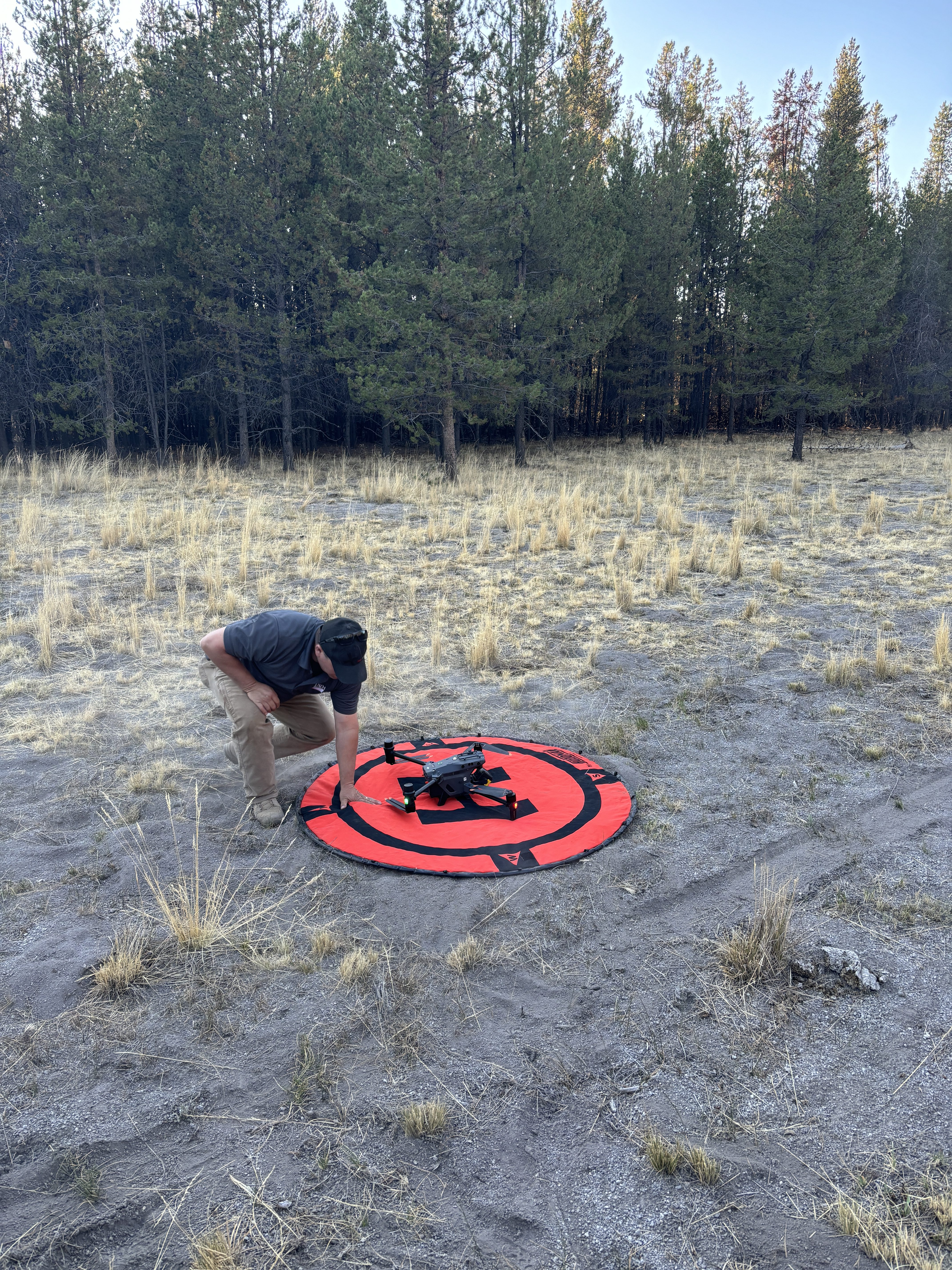

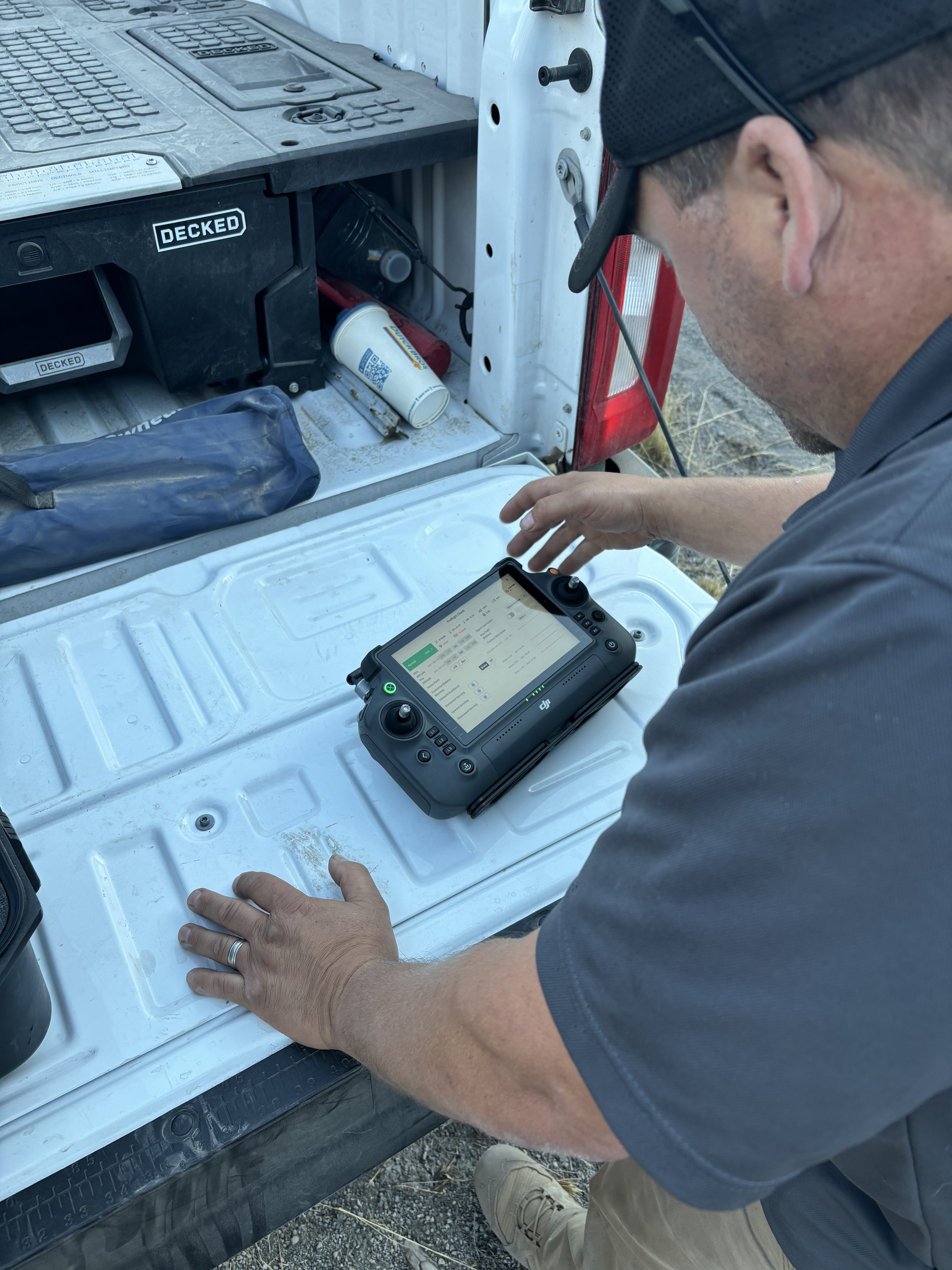
Attendees learn how to utilize drones to haze wolves during a field outing while in Oregon attending wolf-livestock conflict training.
For the next two days, staff dove deeper into understanding how drones have worked in western Oregon and where they could be used in Colorado. Field days gave them a chance to see what landscape worked best and different types of hazing tactics that can be used based on the location of the wolf to cattle. To haze the wolves, loud music, human voices, and gunshot and firework sound effects were blasted on a speaker attached to the drone. Staff saw firsthand how this new tool can, in the right situation, go a long way in hazing wolves.
The days often started early in the morning and ended late at night, allowing for classroom and practical application at a local producer’s property currently experiencing wolf activity. In addition to hazing, wolf biologists from ODFW shared how they manage wolves locally and other topics to help the team better understand wolf management in Oregon. Halfway through the week, the team would pack up and head east to La Grande, an area where ODFW has more wolf management ability similar to Colorado.
The second half of the week focused on depredations, from a comprehensive walkthrough of Oregon’s wolf depredation investigation process to hearing from local producers who have experienced depredations on private and public land. Already trained in investigating bear and lion depredations, a training all CPW district wildlife officers get, staff focused on identifying wolf-specific signatures, including attack characteristics and feeding characteristics, etc.
In addition to depredations, staff would continue building on hazing and prevention techniques earlier in the week, this time focusing on sheep. Heading out into the field, the team met up with a local sheep producer to hear about their experience and learn how they are protecting their flocks.
While cattle are often turned out on public grazing allotments, sheep are monitored more closely around the clock, often using herding and guard dogs. At night, sheep herders will gather up sheep on bedding areas to keep a close eye on them when predators typically hunt for food. For one Oregon sheep producer, implementing night penning, which includes electrifying the fencing, into their operation in addition to guardian dogs, has shown success for their operation. Working with the producer, the team not only learned the benefits of this minimization tool, they also learned how to evaluate locations where this could work best and how to properly build the pen. Once the pen was established, they saw how easy it was for the herder to round up the sheep into the pen, close it off and secure it for the night


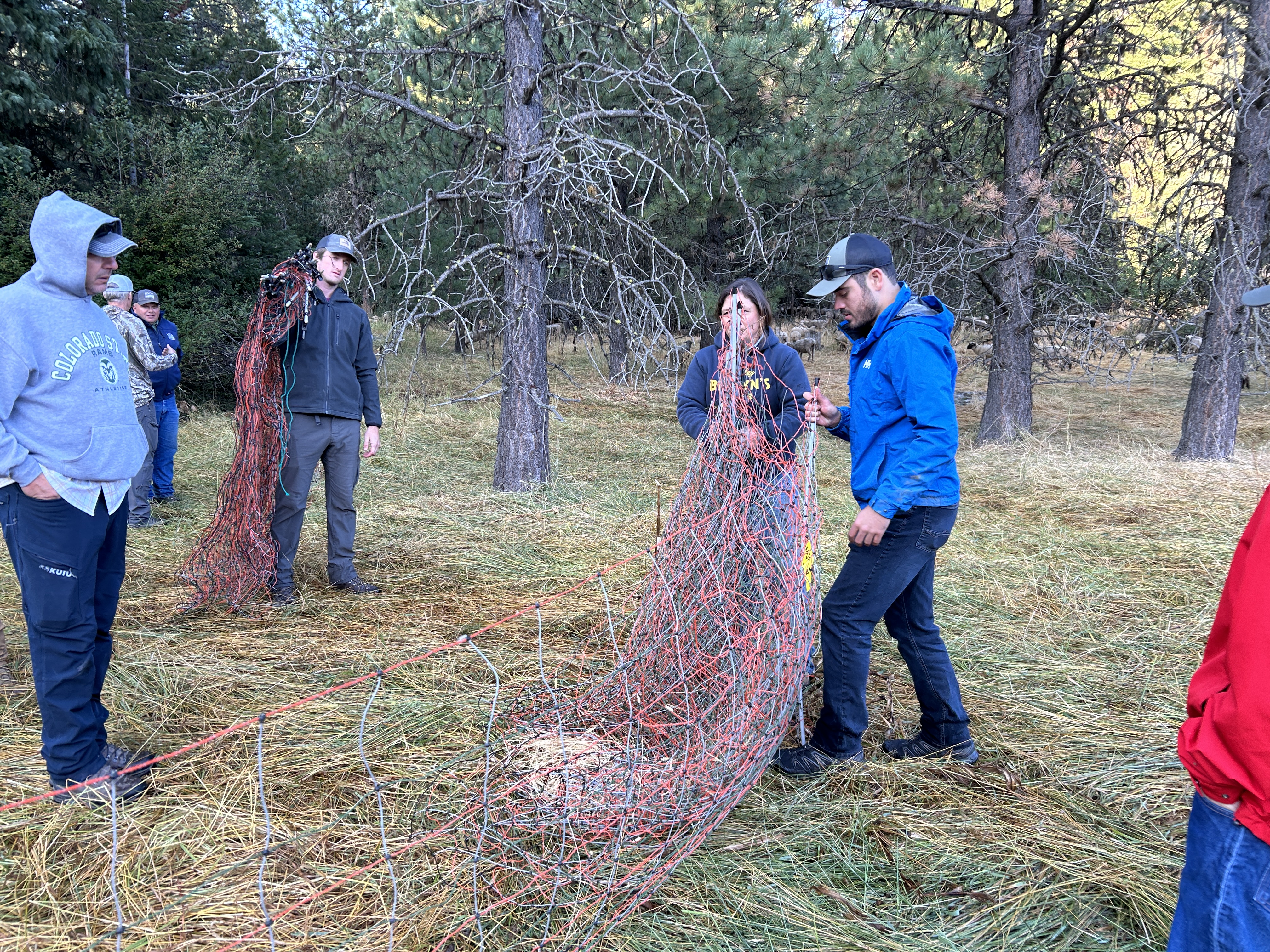
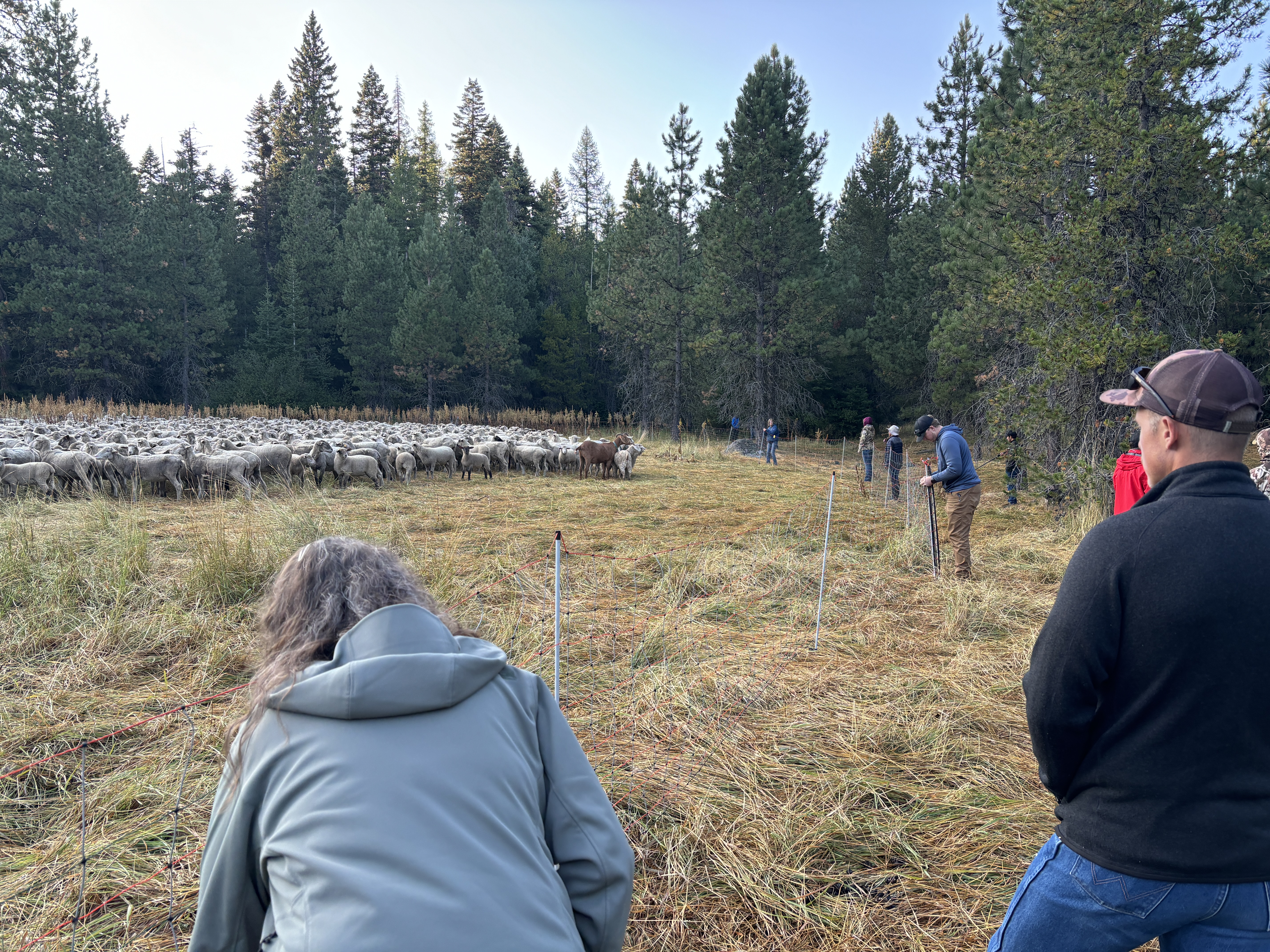
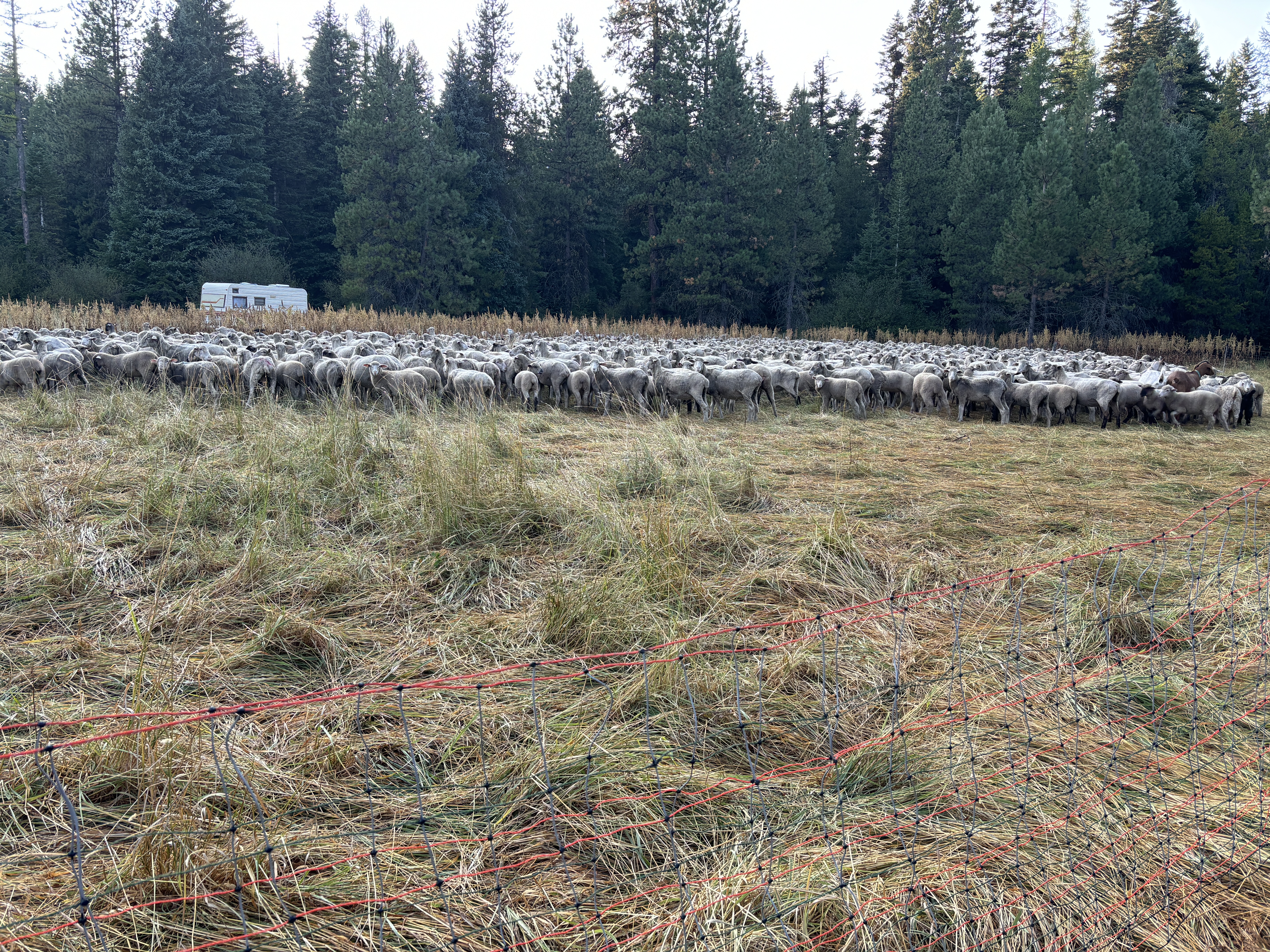
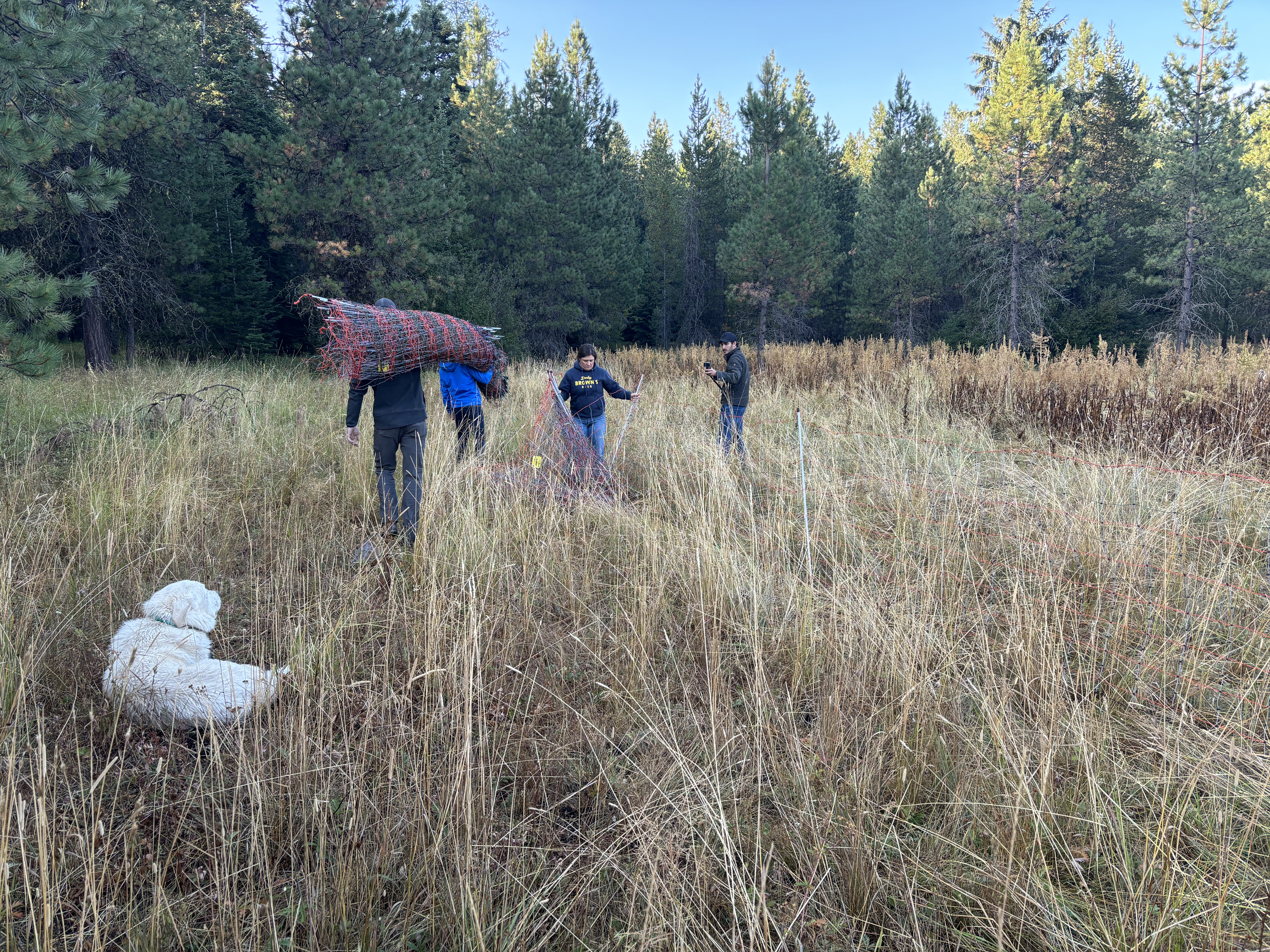
The team works to help install an electrified pen for sheep at night in August while attending wolf-livestock conflict training.
This first week of training challenged the group to think outside the box, expanding their knowledge of nonlethal prevention tools, techniques and depredation investigations.
On Saturday, Aug. 24, the team packed up and began the trip east to Idaho. Here, the WS Idaho team manages wolf-livestock conflict mitigation and depredation investigations, while Idaho Game and Fish oversees all other wolf management for the state. Once again, the team would find themselves waking up early in the morning and returning late at night, spending time both in a classroom and out in the field. Expanding on depredating investigations and conflict mitigation tools, the team also looked at how habitat influences wolf behavior and activity.
“It was important for us to be in the field working closely with our partners and producers,” said Kohn. “When 90% of our job is in the field, having this hands-on experience only helps us put what we learn into practice. The fieldwork in Idaho was especially helpful because it allowed us to see how wolves use habitat, including where they chose den and rendezvous sites.”
During the first half of the week, one site visit took the team to meet with a cattle rancher who has an allotment in an area with a high population density of wolves and elk, similar to what ranchers experience in Colorado. Another visit was to a high-country sheep allotment to learn how range riders, provided by USDA APHIS Wildlife Services, can help producers protect their sheep. Learning best practices, limitations and how to use this tool effectively will help as CPW works with our partners at the Colorado Department of Agriculture to build out a similar range-rider program.
Wrapping up the week and their training, the team headed back into the field one last time to observe a wolf den and rendezvous site. Habitat plays a critical role in the behavior of wild animals, and different habitats can present both challenges and opportunities for the animal and producer. For instance, understanding what wolves look for when selecting a den site and being able to recognize a den site is important for assessing the risk to producers during the calving season. It’s also crucial to know how to identify wolf activity in the area and whether that activity is specific to a particular location. This involves being able to recognize wolf scat and differentiate between different tracks.

“We learned a lot during our week of training in Idaho and the reality is, we had only scratched the surface,” said Kohn. “Getting to work with our federal partners in Idaho and, more importantly, the local producers, was very impactful. Wolf habitat is wolf habitat, and the landscape is not that much different than where we are seeing the most activity here in Colorado.”

As we learn to navigate this new reality with a new animal on the landscape, having a proactive mindset is going to be critical as we move forward. We know we won’t be able to prevent all depredations; however, the two weeks in Oregon and Idaho helped CPW staff plan for the future by looking at new tools to minimize conflict and provide support for our agricultural community. While some of the training built upon what CPW district wildlife managers, wildlife damage specialists and wolf conflict coordinators already know, this got them to think about new ways to look and implement new approaches to doing things. The training took them out of their day-to-day routine and what they know and put their knowledge and newfound skills to work in areas similar to those they work in daily here in Colorado.
“This training was valuable in many different ways,” said Kohn. “One thing we learned is that even after roughly 15 years of wolf management in Oregon and 30 years in Idaho, they still see conflict and challenges. Yet that hasn’t stopped them from being proactive by looking forward to what can be done and working with their ag community.”

From the beginning, CPW has made it a commitment to work with our woolgrowers and cattle producers. Having a better understanding of how we can help is a small part of the bigger picture. We understand that not one solution works for everyone, and it’s important to look at the full picture when working to reduce conflict. It’s not just about implementing a tool, it’s also about knowing what that looks like from start to finish, such as timing and cost for implementation both for CPW and the producer. We also look at what the risk is if nothing is done to help.
Ranchers are some of the best conservationists, not just in Colorado but across the West. If not for their help, CPW’s work to restore and protect threatened and endangered species like the black-footed ferret, Gunnison sage-grouse, and many others couldn’t have been done. As we navigate a new species on the landscape, CPW will continue to look for training opportunities and partner with the agricultural community to find solutions that work to help them minimize and prevent depredation from occurring.
Colorado Parks and Wildlife can’t thank Oregon’s Department of Fish and Wildlife, Idaho Fish and Game, and USDA APHIS Wildlife Services enough. Most importantly, we want to thank local producers for taking time out of their busy schedules to help us help our local agricultural community. You opened up your property and shared your expertise and for that we are grateful. We know this is just the beginning of our journey, learning how to successfully navigate living with a new animal on the landscape.
Written by Rachael Gonzales, Northwest Region public information officer for Colorado Parks and Wildlife.


2 Responses
Why were these predators brought into Colorado in the first place? I seriously doubt that the ranchers and outfitters wanted them here to begin with as they all knew what the outcome would be to their livestock and outfitting businesses and we’re seeing it now.
How do you go about protecting a herd of cattle on open range at night? Does drone hazing really work at night on these vast areas? What about protecting cows (elk and cattle) when they drop their calves on open range – does drone hazing work in those situations? A drone’s airborne time is limited by the life of its batteries and flying one at night is extremely hazardous so how are you getting around those two issues? I fly large commercial drones and I won’t fly one at night nor will I fly one in the weather. For this program to work effectively, don’t you have to have at least one drone airborne for at least 12 hours a day?
Ferrets and grouse do not kill sheep and cattle. Coyotes and wolves do. This will destroy elk and deer hunting in Colorado as well as raise the price of lamb and beef for everyone.